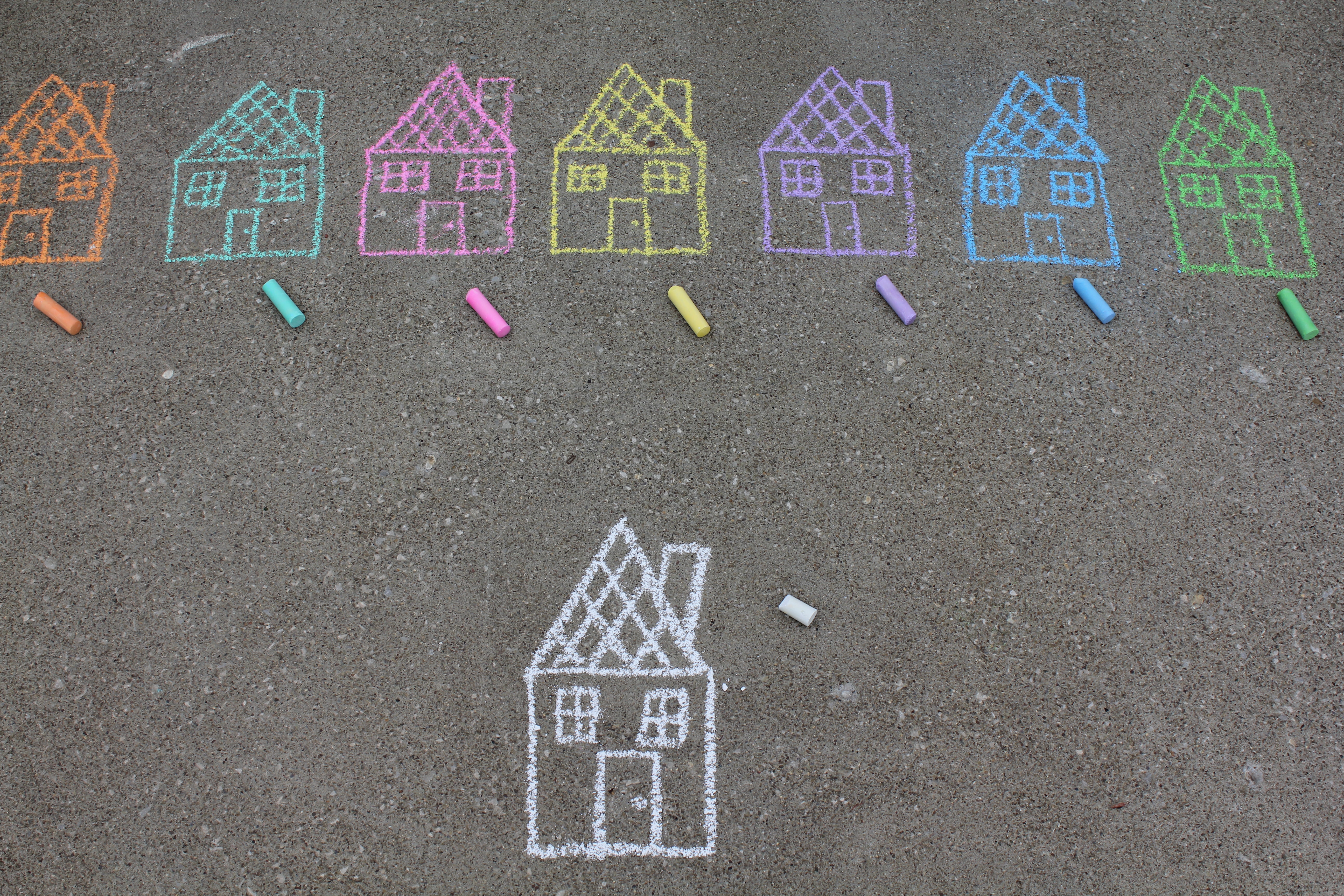
“Let us now imagine that this castle, as I have said, contains many mansions . . . where the most secret things pass between God and the soul.”
St. Teresa of Ávila, Interior Castles
A few years ago, I was sitting in church next to a little girl who was about 8 years old. She was bored and I noticed her fidgeting. I handed her a piece of paper and asked her if she would draw me a picture of a prayer.
She looked at me and whispered loudly, “How do you draw a prayer?” I suggested that she draw whatever she thought. She nodded as she whispered (loudly again), “Okay.”
She started by drawing clouds. Then she added a chair sitting on top of one of the clouds. Next, she drew Jesus sitting in the chair. Then she drew a bunch of letters with wings “flying” up around him. Jesus had a passive expression on his face. She erased his arms. She redrew them reaching out and picking up one of the letters. A bunch of letters went right past him. “They’re all asking for things,” she told me as she pointed to the winged letters.
How would you draw prayer?
“For we ourselves are the castle: and it would be absurd to tell someone to enter a room when he was already in it! But you must understand that there are many ways of “being” in a place.”
St. Teresa of Ávila, Interior Castles
“Here!” she said and put the picture in my lap. “That is what happens when we pray,” she added as she took her shoes off and asked me for more paper. She moved on to drawing princesses.
My heart hurt when I considered her drawing. Jesus was aloof, remote, and not all that interested in collecting the prayers that flew past him. She was nowhere in the picture. Prayers were requests recorded on paper flying toward Jesus at a rapid pace. They might or might not catch his interest. He had to be selective. Hope was absent in this drawing.
My own children were teenagers at this time. They were used to going to school and having lockdown drills. They were used to seeing news stories of more shootings. They heard politicians, police officers, and other adults they knew personally and cared about all declare that they were praying for the victims. Both said around our dinner table, “As if prayer is going to actually do anything.” They rolled their eyes. I understood their perspective, but my heart still hurt. Hope was absent in their experience of this common language for prayer.
We have always attended churches that believe deeply in the power of prayer. We believe in the power, beauty, and grace of prayer in our home. Was their image of Jesus that aloof? Those particular “prayers for victims” were fruitless in their experience. I wondered what was happening.
When and how did our definition of prayer become so small, so weak?

“As far as I can understand, the door of entry into this castle is prayer.”
St. Teresa of Ávila, Interior Castles
I wanted—and needed—new language to talk about prayer. In her masterpiece Interior Castles, it was St. Teresa of Avila who helped me find a new way to talk about prayer. Although she writes about how to pray, it is far more than just a how-to book. She describes the journey of a soul and names it prayer. She helped me rethink my own small, tight definition of prayer.
As I thought about how I would respond to my own question, I began to envision prayer as a house with many rooms. Prayer is an on-going conversation with the Triune God. But it’s more than a conversation. It’s life with the Trinity.
I found myself invited into this house that is prayer! As you continue to accept invitations to move inside, this house (this life of prayer), unfolds before you.
There are many ways inside to meet with the Trinity. It is a house of friendship and warmth. The rooms are different, but the substance is the same. It is all prayer.
It’s a place of welcome. You are wanted. You listen and you are listened to. There are invitations to join God in mission, in suffering, in rest, and in celebration. Living our prayer invites us to pay attention to what God is doing and to participate.
This is a beautiful life lived together. You come as you are, wherever you are, with whatever weighs you down or imperfections you bring with you. Come. God is already there ahead of you to welcome you.
Could prayer be a place to experience God’s hospitality?
I hope so. Hope radiates from this house.
I wonder how you envision prayer.
One response to “Reimagining Prayer: A House of Many Rooms”
[…] my last post, I described how my own vision shifted to view prayer as a house where I encounter the Trinity. […]